Production-grade AI. Built where it has to work.

Your AI system gets designed, built, and shipped to the standard of FDA-regulated manufacturing, medical devices, and operationally-real environments. The person in your first meeting is the person building your system.

You hear back within one business day. If it’s not the right fit, you’ll hear that too — with a useful next direction.

Where this works

Building for problems with consequences.

The engagement fits when the problem is named and the constraint is real. The deliverable might be a system in production, or a written read on whether to build one. A few shapes the work tends to take.

  • Regulated environments
  • Safety-critical workflows
  • Operationally-real systems
  • Production AI deployment
  • Agentic data extraction
  • Pattern-recognition models

A queue that won’t clear at scale

A team reviewing thousands of exceptions a month by hand — trade reviews, claims, QA, contamination flags. Off-the-shelf tools handle a fraction. The bar isn’t a helper that suggests; it’s a system that clears the queue without introducing a new class of failure.

AI inside a regulated submission

A feature that has to ship and has to clear the same validation bar as the rest of the device or system. “Tested” and “validated” are not the same word, and the documentation has to hold up to audit — not just internal review.

Production, not another pilot

A previous build looked good in demo and broke under real load. Limited runway for a second mistake. What’s needed is a system that holds up in real conditions — and a team that can keep it that way after the engagement ends.

A model that has to be defensible

Hours of human work that could be automated, but every output has to be explainable to the people it affects, auditable by the people accountable for it, and operable day-to-day by staff who are not engineers.

If AI isn’t the right tool for your problem, you’ll hear it on the first call — before any payment is exchanged. The most expensive AI project is the one that shouldn’t have been built.

How it works

Six steps. Every engagement.

The shape is the same every time. Depth and duration vary by the problem.

01≈ 1 hour to write

Written intake

You provide

A short written description: the problem, the current state, the timeline, and a realistic budget range.

You receive

A response within one business day — including “this isn’t a fit, here’s where to look.”

0230 min · no charge

Intro call

You provide

Time to talk through the intake, and the candor to be told “maybe AI isn’t right for this.”

You receive

An honest read on fit, and the shape of a Discovery Sprint if it makes sense.

03≈ 2 weeks · paid

Discovery

You provide

Access to the right people and the existing data.

You receive

A written scope, architecture, evaluation plan, and a fixed-price Build proposal. Yours to act on — with or without us.

046 – 10 weeks

Build

You provide

A weekly review, integration access, and one decision-maker who can unblock.

You receive

A deployed, working system. Monitoring, retraining, and the runbook your team will operate.

05Capped · short

Stewardship

You provide

A short bridge period for your team to take over.

You receive

Bug-fix coverage, on-call windows, and an explicit capability transfer.

06Engagement ends

Handoff

You provide

A debrief and permission to write the case study.

You receive

The full system, owned by you. The engagement ends — that is the goal.

1.  Intake and intro call are not billed. Discovery is paid because the deliverable is a written document you can act on with or without us.

2.  Build engagements are fixed-price, scoped at the end of Discovery. You will not be billed hourly during a Build.

3.  Stewardship is capped and short by design. You won’t be locked into a long-term retainer.

Selected work

Built, shipped, and held up under pressure.

Mankani Labs is new — the discipline behind it is not. What you’ll see below: a live independent project under the practice, then the regulated-environment engineering work that set the bar for what your engagement will hold to.

Chess Route — Structured data extracted from messy sources at scale — running in production, in use today.
Live · Mankani Labs

Consumer product · agentic data extraction

Structured data extracted from messy sources at scale — running in production, in use today.

An agentic system that discovers and extracts structured information from websites, PDFs, and inconsistent formats — the work that breaks brittle scrapers. Designed and shipped under Mankani Labs. Production AI is not a slide; it is something that runs and gets used.

Built under
Mankani Labs
Approach
Agentic LLMs · extraction
State
Live · in use today
Rapid Micro Biosystems — Deep-learning research for microbial contamination detection, held to the FDA accuracy bar.
Earlier · software engineer

FDA-regulated pharma quality · R&D

Deep-learning research for microbial contamination detection, held to the FDA accuracy bar.

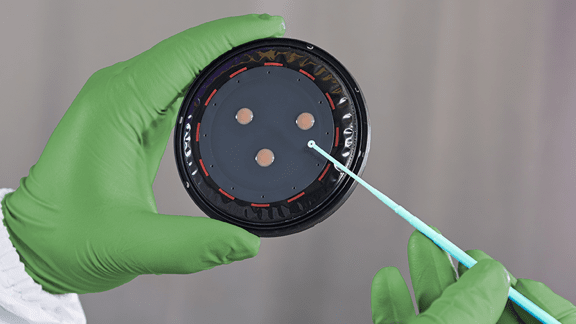
I worked on computer-vision models for microbial contamination detection at Rapid — research-stage, held to the FDA accuracy threshold any platform version would have to clear. The constraint: a false negative is a patient-safety event, not a software bug.

Setting
Pharmaceutical R&D
Approach
CNN-based computer vision
Held to
FDA accuracy bar
Medtronic — Hugo RAS — Unstructured surgical data turned into training improvements that compound patient safety.
Earlier · senior software engineer

Surgical robotics

Unstructured surgical data turned into training improvements that compound patient safety.

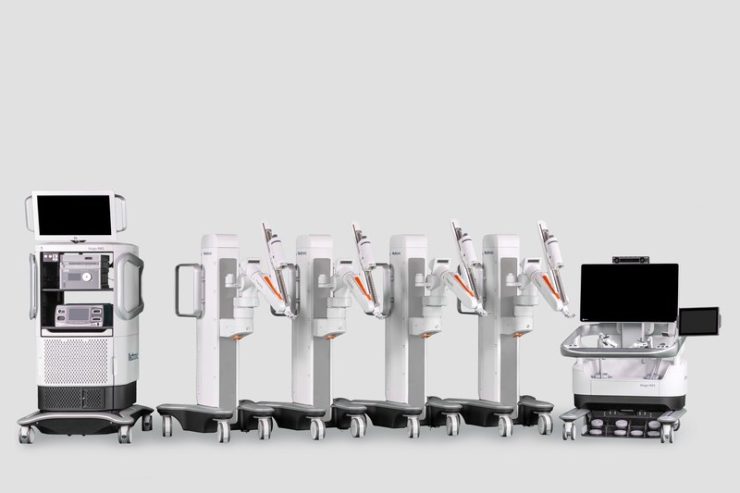
I worked on pattern recognition for the Hugo robotic-surgery platform — reading procedure data at scale, surfacing error patterns, and feeding them back into surgeon training. The constraint: this is the operating room. “Mostly works” is not an acceptable failure mode.

Setting
Robotic-surgery platform
Approach
Pattern recognition
Used by
Surgeon-training teams
What you can expect

Six principles. Every engagement.

More than once, they’ve been the reason an engagement was turned down — including ones that paid well.

01

You get production, or nothing.

You get systems that ship — not proof-of-concept demos that die on a shelf. If your problem can’t be solved end-to-end inside your budget, you’ll hear that on the first call — and the engagement won’t be taken.

02

The model is twenty percent of the work.

Data quality, monitoring, retraining, integration, and operational discipline are the other eighty. Your whole pipeline gets engaged, or none of it does. A model in isolation is a demo, not a system.

03

You get regulated-first standards.

A decade inside FDA-regulated manufacturing and surgical-robotics platforms teaches a particular discipline — extensive validation, careful documentation, audit-ready pipelines, designed-for-failure architecture. Those standards come with your engagement, whether your industry requires them or not.

04

Sometimes AI is not your answer.

A rule-based system, a process redesign, or a single good hire often beats an AI investment. You’ll hear that — before any payment is exchanged — and you’ll be told not to hire us when that is the right call. Saying no is a service.

05

You should be able to fire us.

No long-term retainers. The system ships, the team hands off, the engagement ends. Your deliverable always includes a runbook so your team can operate, monitor, and maintain the system without us.

06

Your brief gets specific, or it doesn’t get worked on.

“We want AI” is not a project. “We want to reduce the twelve hours per week our QA team spends on visual inspection of contaminated samples” is a project. Your brief either becomes specific, or it doesn’t move forward.

Who you’ll work with

A decade of shipping AI where the failure mode was physical.

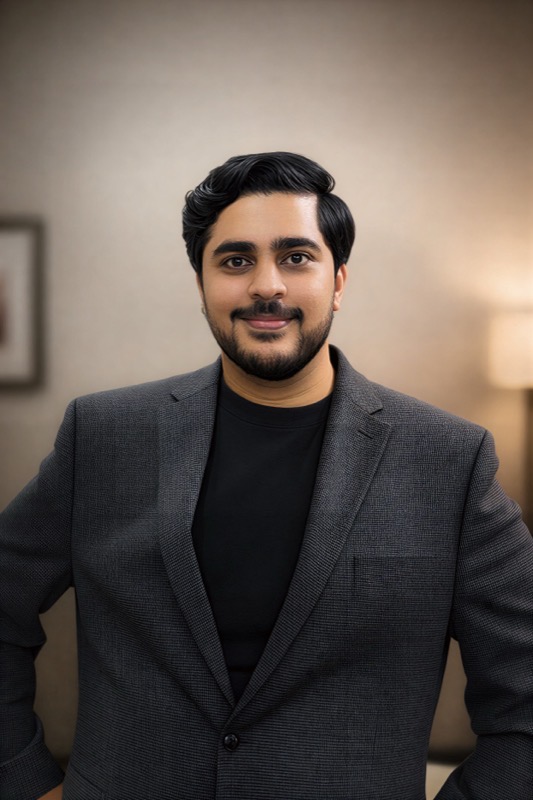
Jaikishin Mankani

Jaikishin Mankani

Founder · principal engineer

LinkedIn

Deep-learning computer vision for microbial contamination detection inside an FDA-regulated pharmaceutical manufacturer. Pattern recognition for a surgical-robotics platform. Independent now. Based in India; clients global.

“The model is usually fine. The system around it is not.”

The lesson a decade in regulated environments teaches.

Mankani Labs exists because that discipline is in short supply — and because the market is filling up with consultants who can build impressive demos and very few who know how to ship reliably into environments where “mostly works” is not acceptable.

The work is done by the person you talk to. No partner-sells-junior-builds rotation, no bench to feed. Fewer engagements, more depth, and the right to refuse work that should not be built.

Education
M.S. Computer Science · UMass Lowell
Practice
10 years · ML in production
Domains
Pharma QC · surgical robotics · agentic AI
Based
India · clients global
Start a conversation

Tell us what you’re trying to solve.

A short written description gets you on a call within one business day. The intro is mutual qualification — never a pitch.

1-business-day response30-min call · no chargeHeld in confidence

A few sentences is plenty. The first call is for going deeper.